
Ever wondered why there's a housing shortage in Dublin or...
 Economics3 pregledi·Ažurirano Jun 3, 2026·6 stranice
Understanding Price Controls in Economics

1 / 6
1
of 6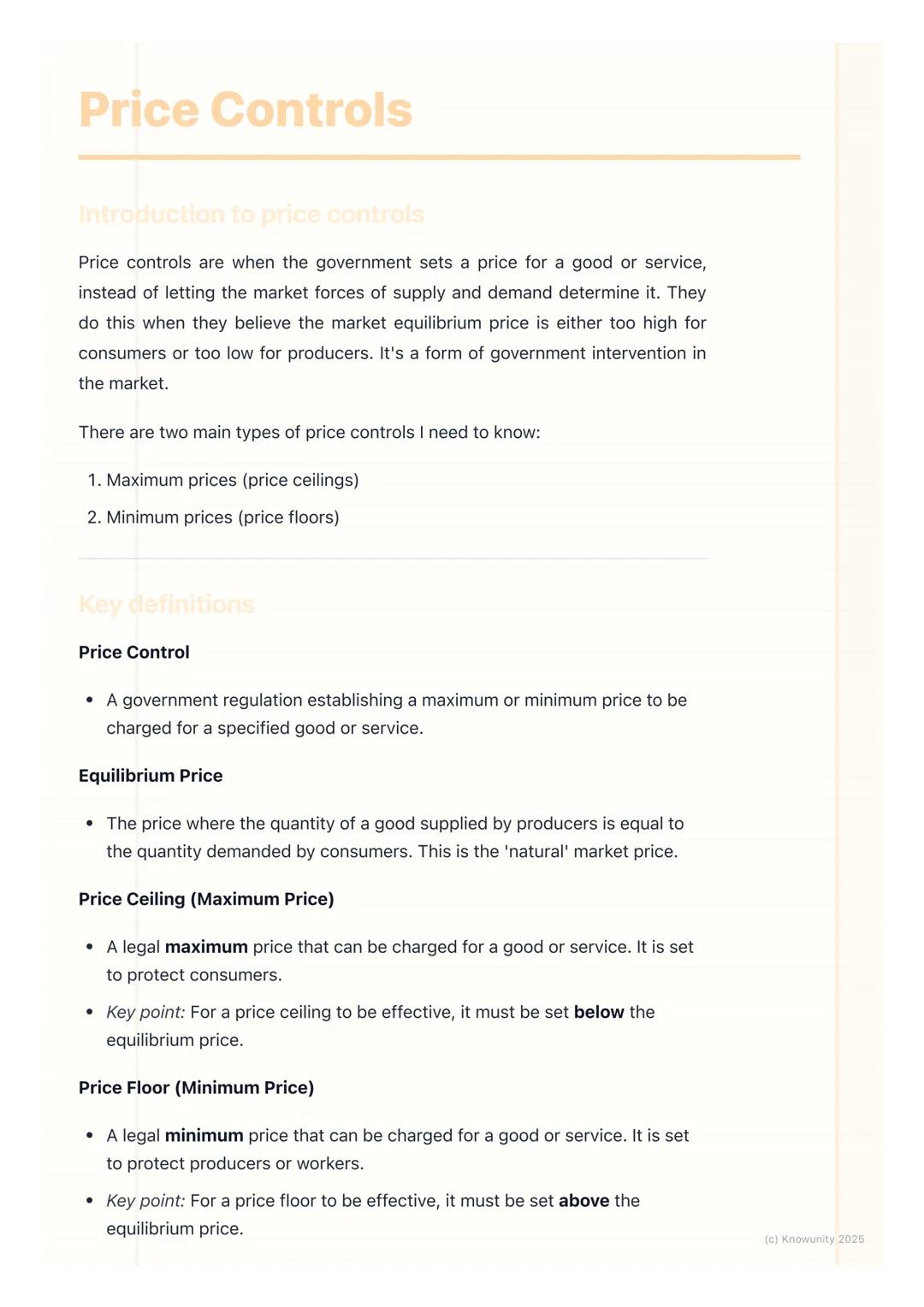
Introduction to Price Controls
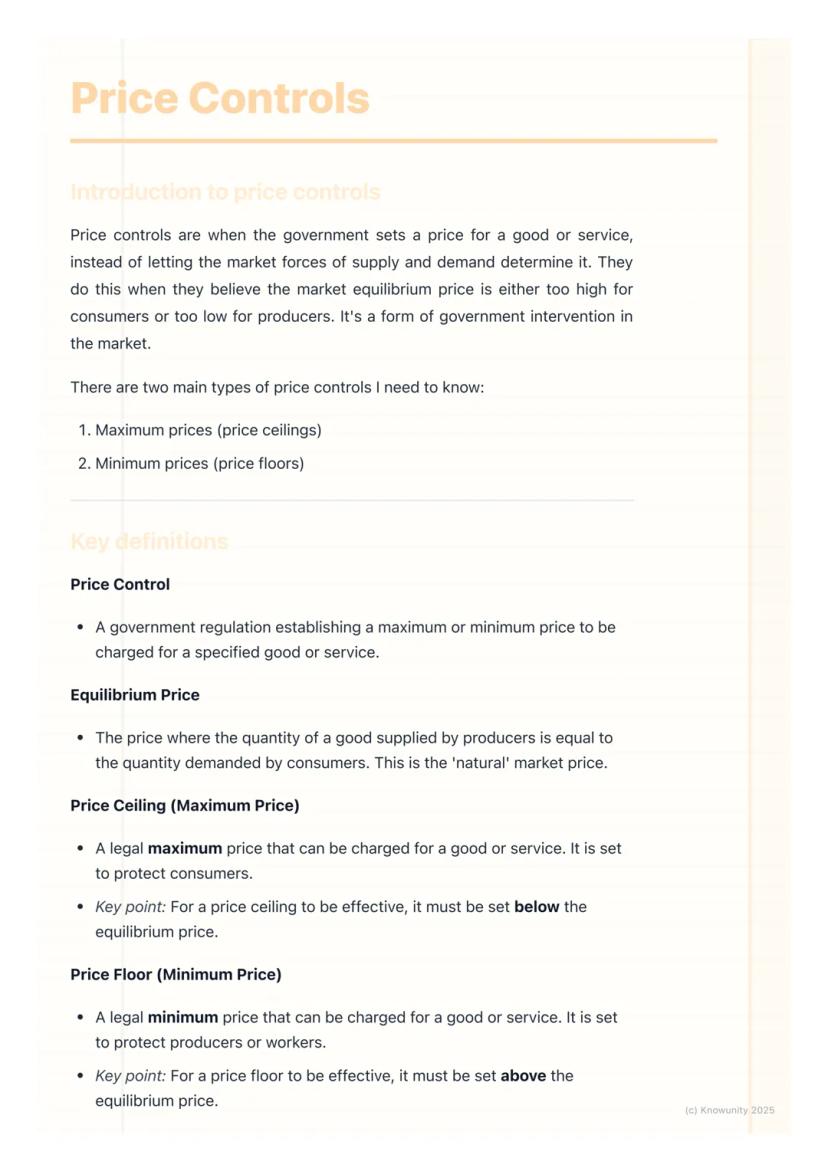
Think of price controls as the government playing referee in the market game. Instead of letting supply and demand naturally set prices, the government decides to intervene when they think prices are either too high for consumers or too low for producers.
There are two main weapons in the government's toolkit: maximum prices (called price ceilings) and minimum prices (called price floors). The key thing to remember? For any price control to actually work, it has to fight against what the market naturally wants to do.
A price ceiling must be set below the natural market price to protect consumers, whilst a price floor must be set above the market price to protect producers. If the government sets these controls the wrong way around, they're completely useless - like setting a speed limit of 200km/h on a road where everyone drives 50km/h anyway.
Quick Check: Remember that equilibrium price is where supply meets demand - it's the market's "natural" price without any interference.
2
of 6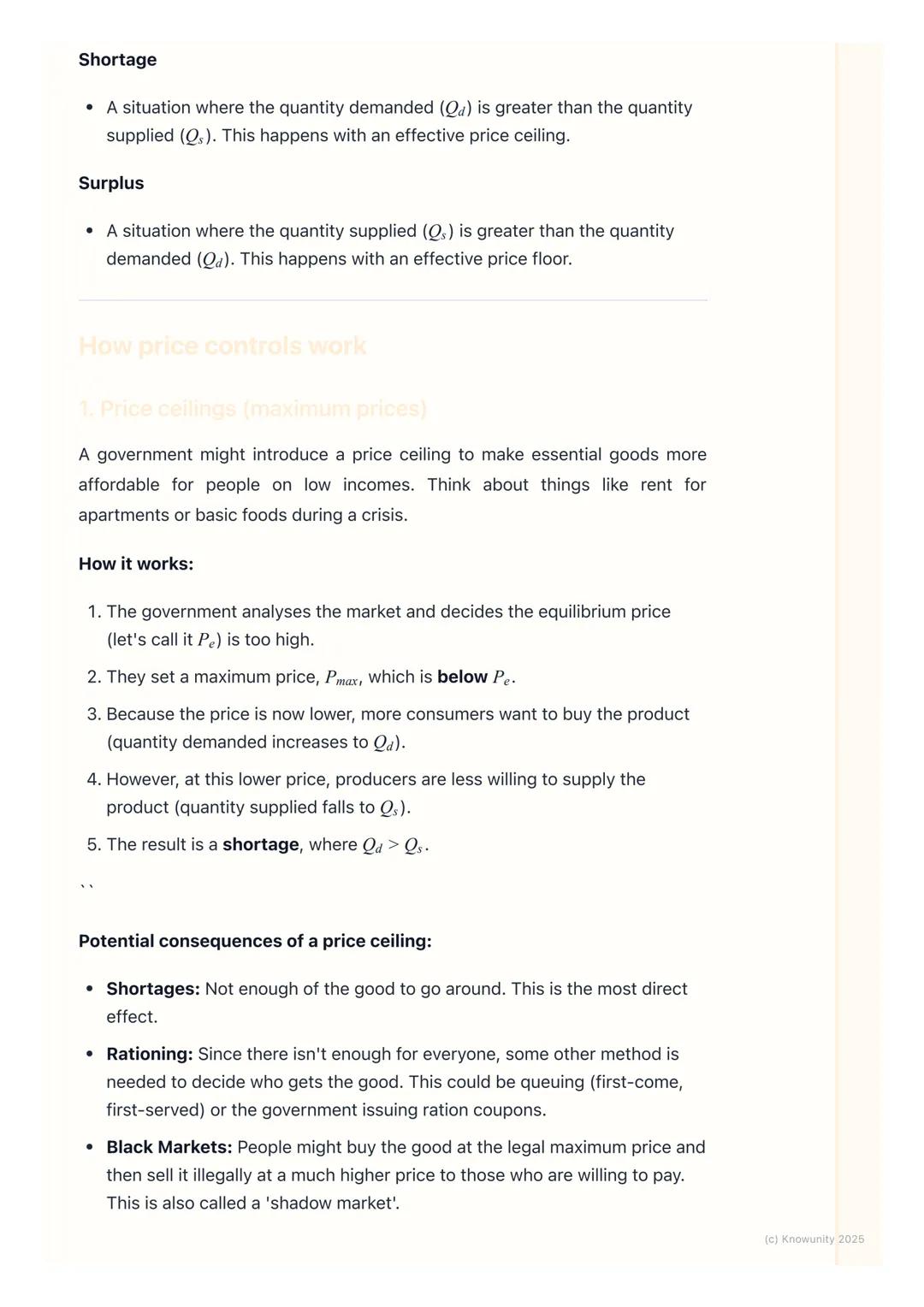
How Price Ceilings Work
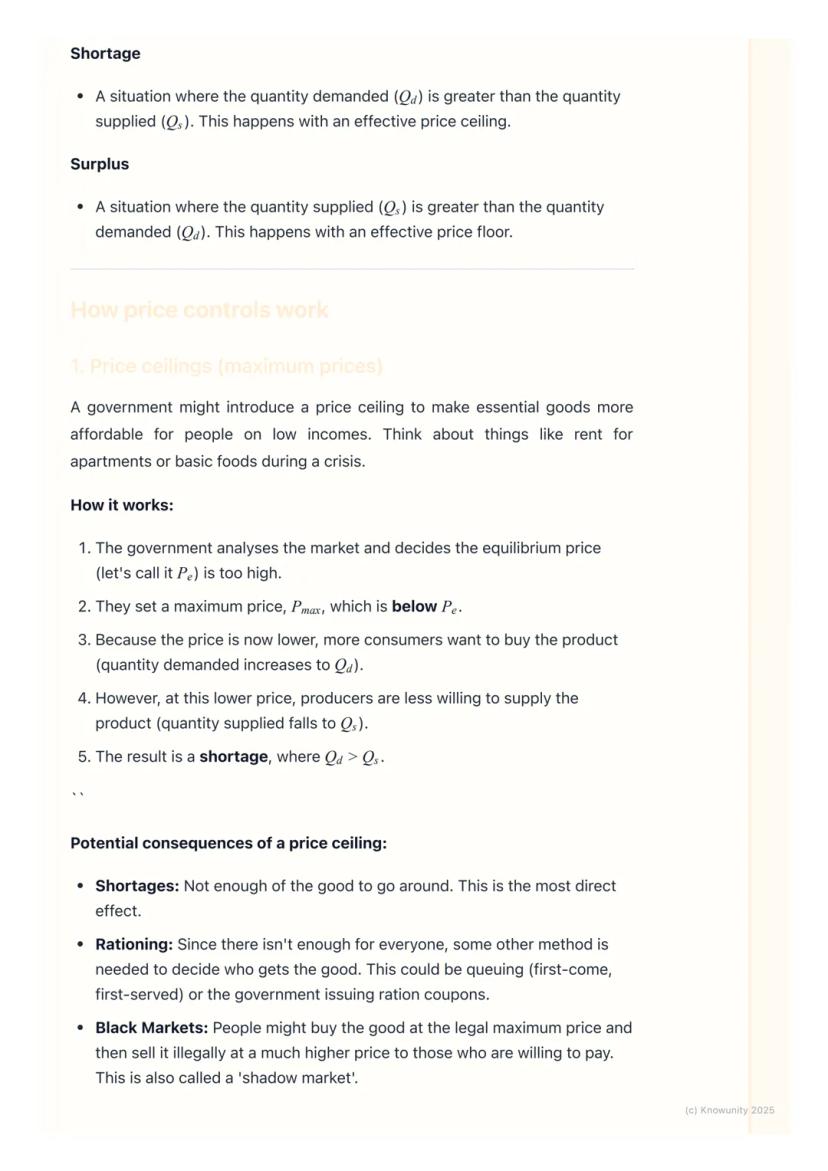
Picture this: the government thinks rent in Dublin is mental expensive, so they cap it below market rates. Sounds great for renters, right? Well, here's where economics gets interesting.
When you artificially lower the price, two things happen simultaneously. More people suddenly want to rent (because it's cheaper), but fewer landlords want to provide rental properties (because they're making less profit). This creates a classic shortage - way more demand than supply.
The consequences aren't pretty. You get massive queues for viewings, people camping out overnight for apartment visits, and some dodgy landlords demanding cash payments under the table. The quality of available rentals might drop too, as landlords cut corners to stay profitable.
Black markets often emerge where people buy goods at the controlled price and then illegally resell them at much higher prices to desperate buyers.
Reality Check: Dublin's Rent Pressure Zones are a real example of price ceilings in action - and you can see the housing shortage they've contributed to.
3
of 6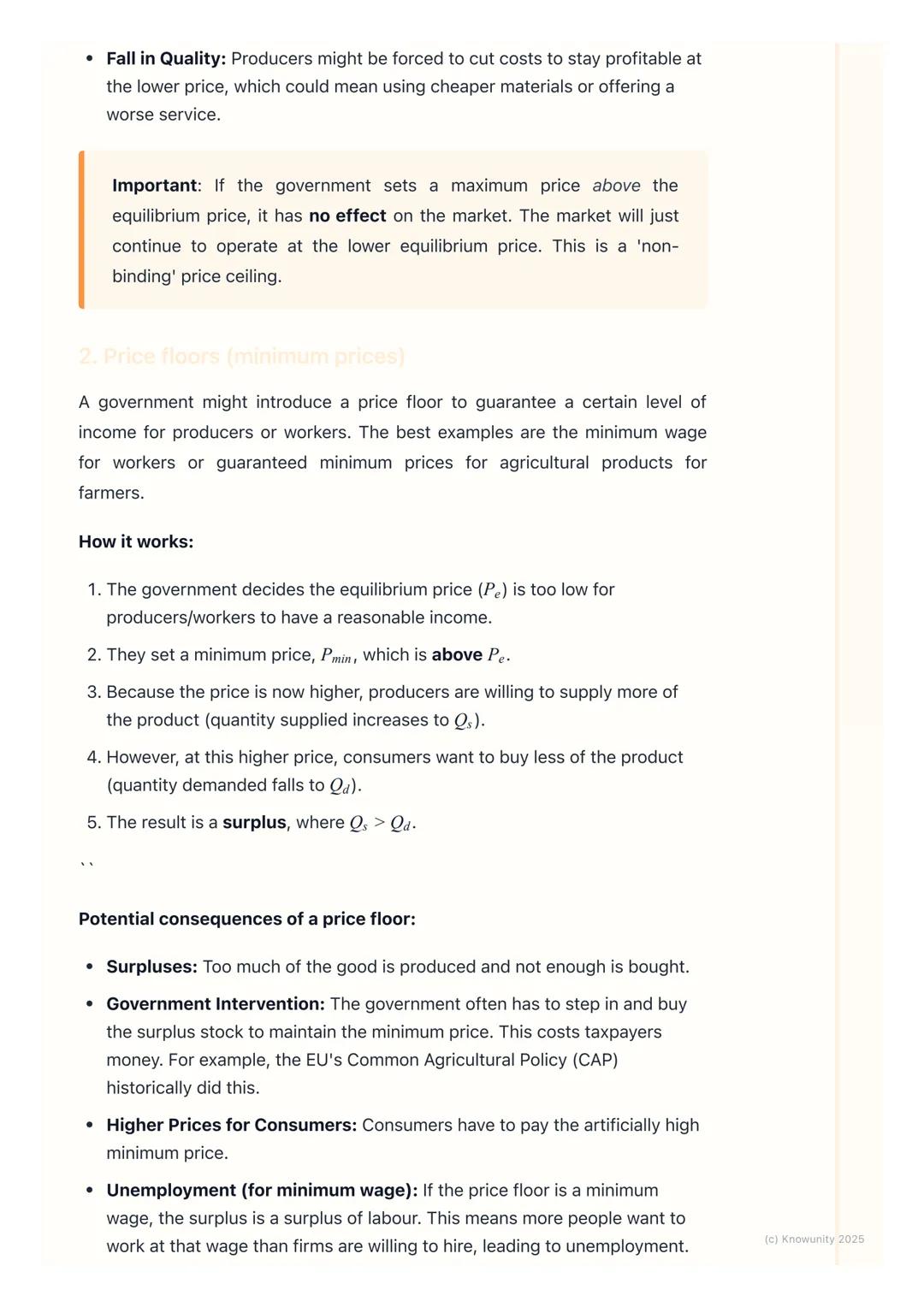
How Price Floors Work
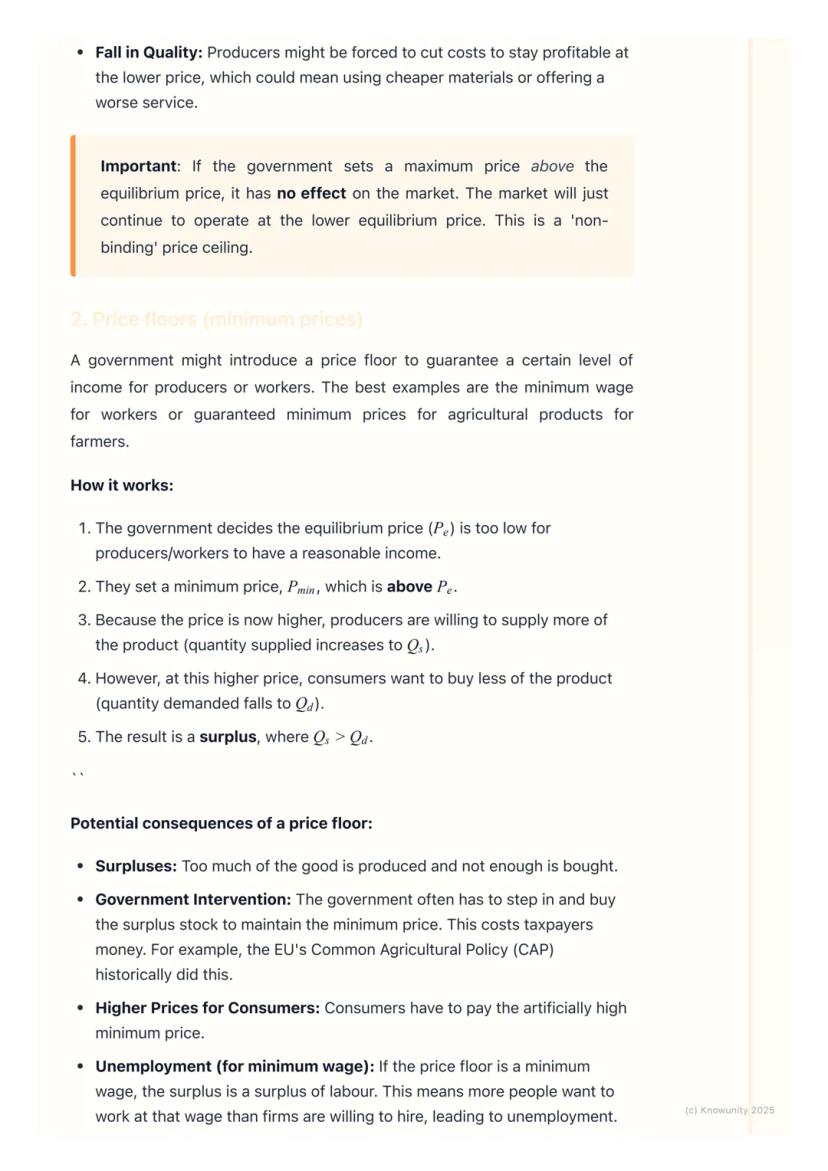
Now flip the script - imagine the government thinks wages are too low, so they set a minimum wage above what the market would naturally pay. This is designed to help workers earn a decent living, but it creates different problems.
At the higher wage, more people want jobs (because the pay is better), but businesses want to hire fewer people (because labour is now more expensive). This creates a surplus of labour - basically, unemployment.
A small café that could afford three workers at €10/hour might only be able to hire two at €12.70/hour. That third person is now unemployed, even though they might be perfectly happy working for less.
The government often ends up buying surplus products when price floors apply to goods (like agricultural products), which costs taxpayers money. With minimum wages, they just have to deal with higher unemployment rates.
Think About It: Ireland's minimum wage of €12.70/hour is a price floor - consider how this might affect small businesses versus large corporations differently.
4
of 6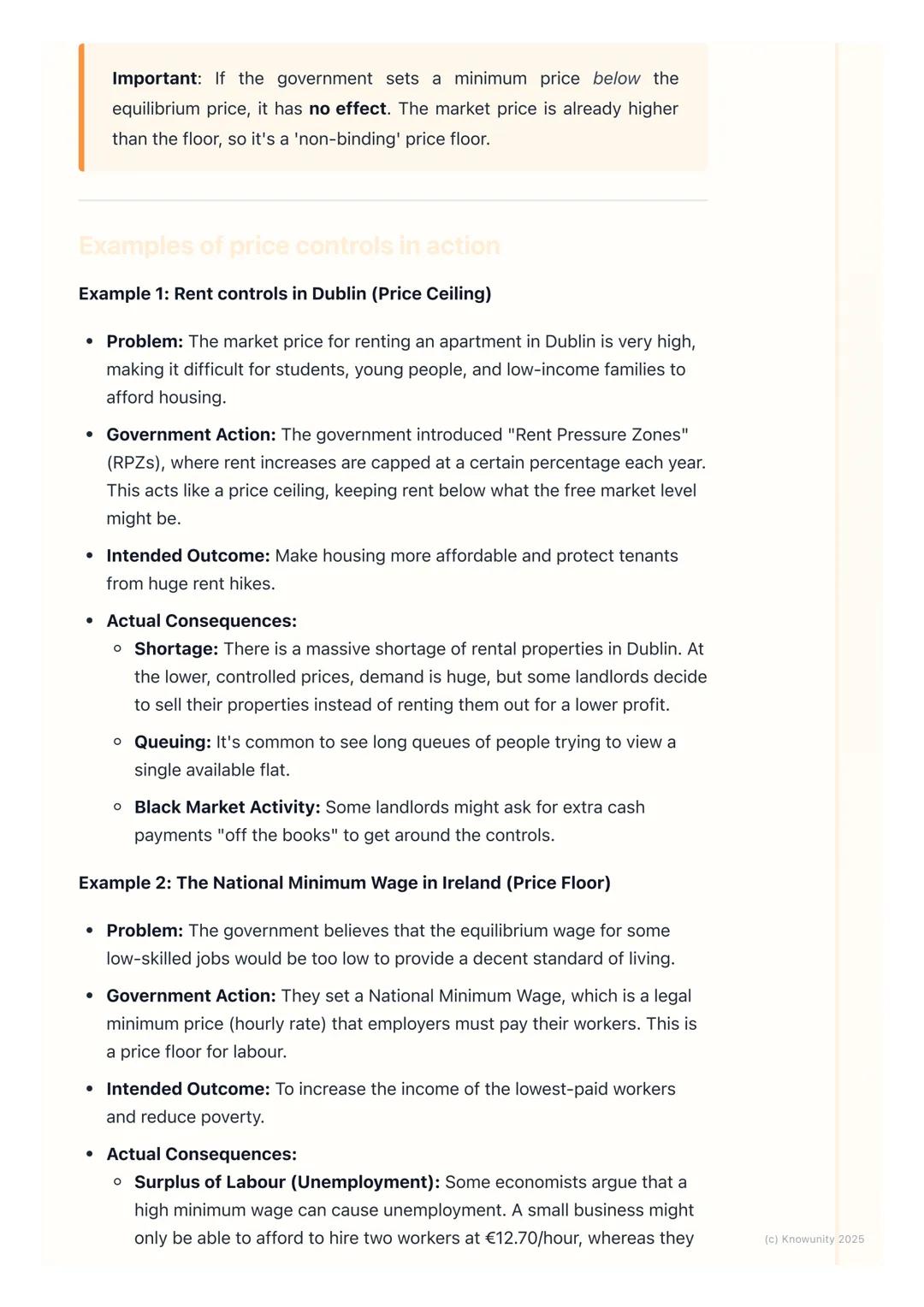
Real-World Examples You'll Recognise
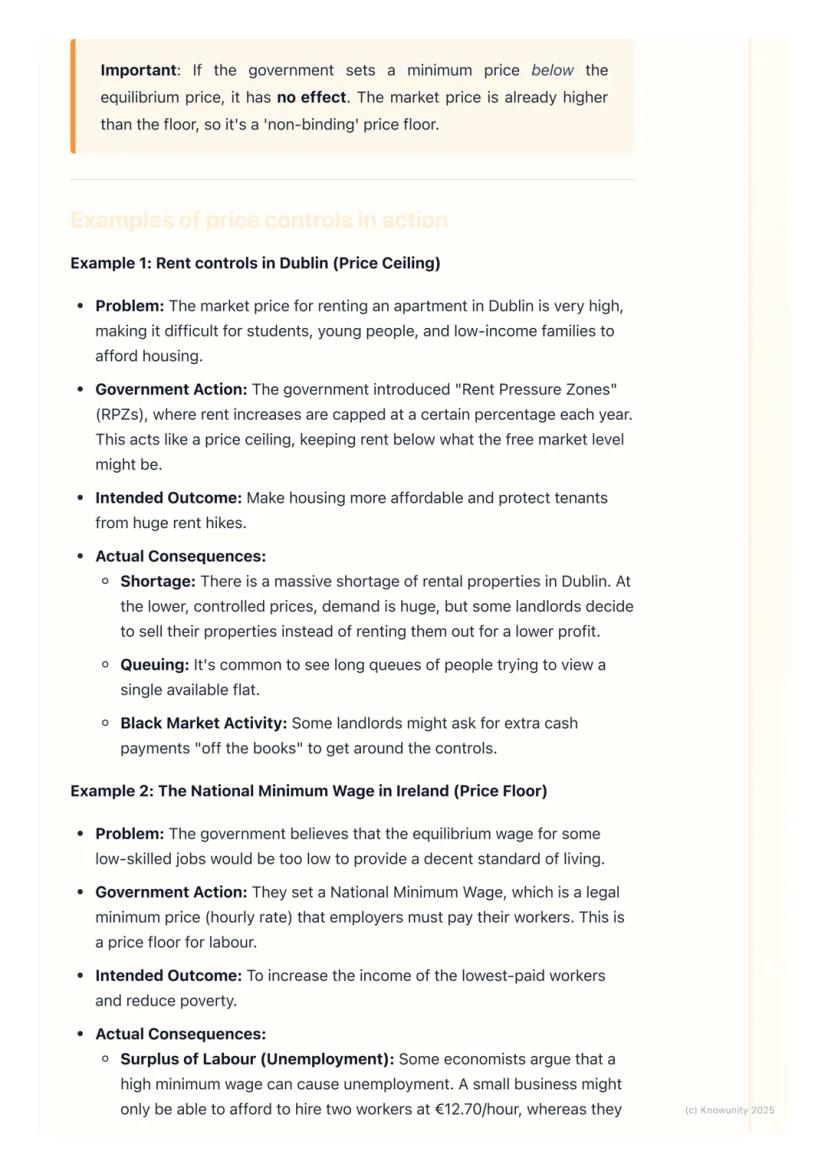
Dublin's rental crisis is a textbook example of price ceiling consequences. The Rent Pressure Zones were meant to make housing affordable, but they've contributed to the massive shortage you see today. Landlords are selling up rather than renting at controlled prices, and the lucky few who find places often face intense competition.
Ireland's minimum wage shows price floors in action. While it definitely helps workers who keep their jobs earn more, some economists argue it makes it harder for young people and inexperienced workers to get hired. Small businesses particularly struggle with the higher labour costs.
The EU's agricultural policies historically involved buying massive surpluses of butter, wine, and other products to maintain minimum prices for farmers. These "butter mountains" and "wine lakes" became infamous examples of price floor consequences.
Each intervention creates winners and losers, and often the unintended consequences are as significant as the intended benefits.
Exam Tip: Always mention Irish examples like RPZs or minimum wage to show you understand how these concepts apply in the real world.
5
of 6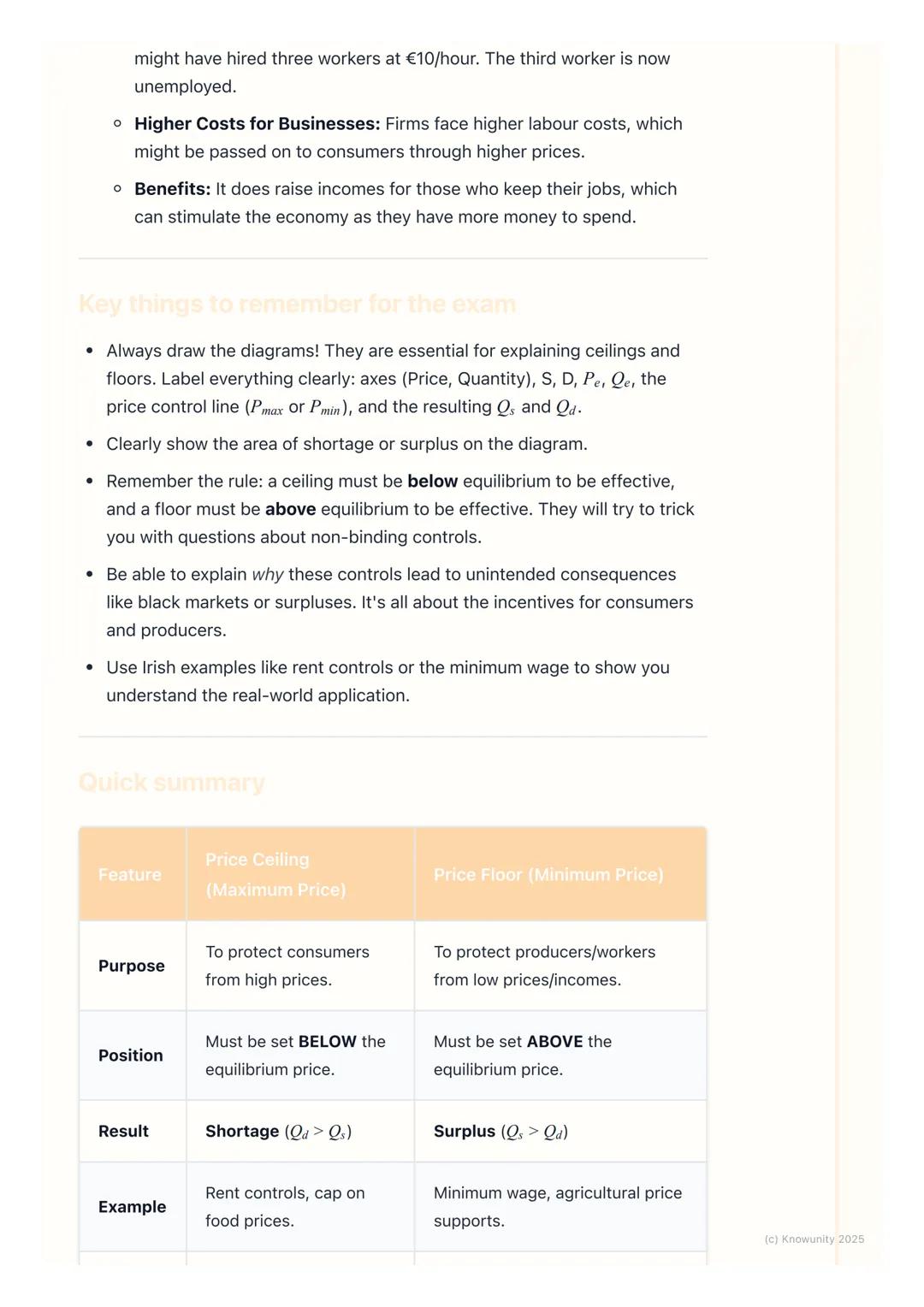
Mastering Price Controls for Exams
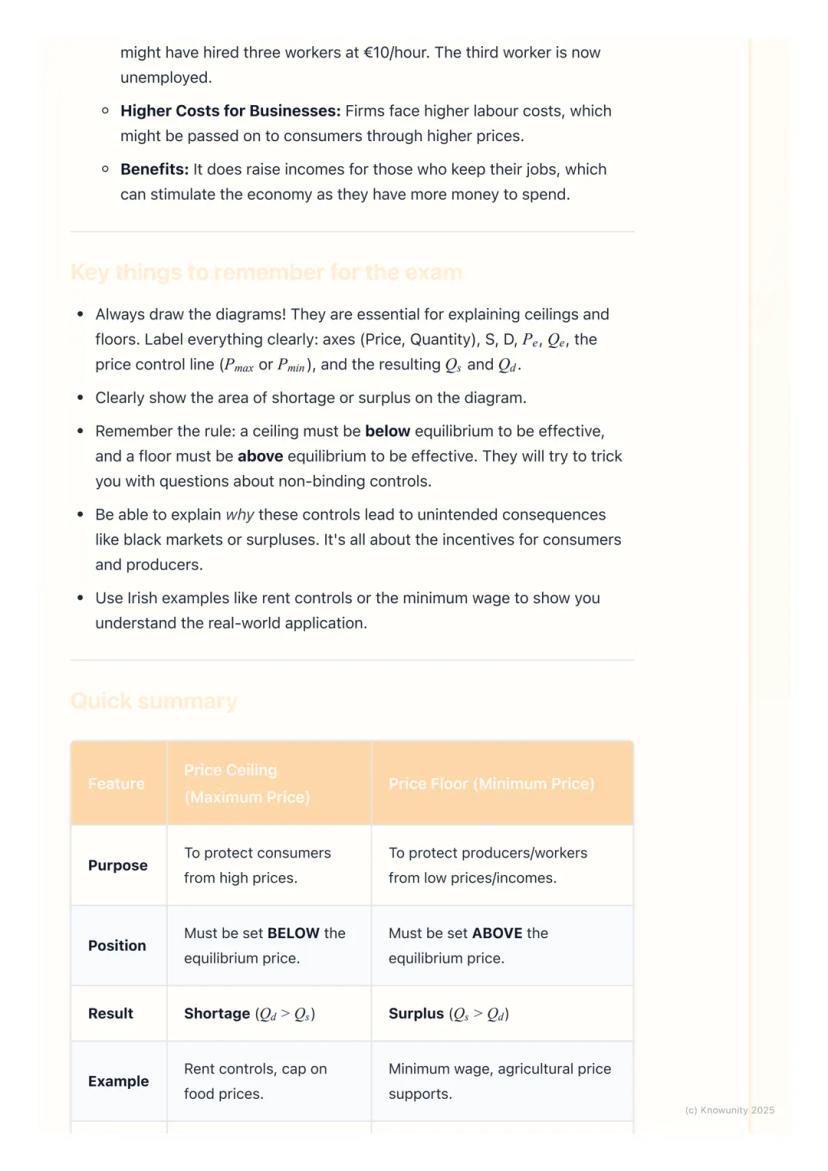
Here's what you absolutely must nail for your exams: diagrams are everything. Draw clear supply and demand curves, mark the equilibrium price, then show your price control line and the resulting shortage or surplus. Label everything clearly or you'll lose marks.
Remember the golden rules: ceilings below equilibrium create shortages, floors above equilibrium create surpluses. If a control is set the wrong way (ceiling above equilibrium or floor below), it's non-binding and does absolutely nothing.
Always explain the unintended consequences - black markets, queues, quality drops, unemployment, or government intervention costs. These side effects often matter more than the original policy goal.
Practice with real examples until they're second nature. Rent controls, minimum wages, and agricultural support schemes are exam favourites because they're so relevant to Irish students.
Success Strategy: Create a simple table comparing price ceilings and floors - purpose, position, results, and side effects. It's perfect for last-minute revision.
6
of 6
Mislili smo da nikad nećeš pitati...
Šta je Knowunity AI companion?
Naš AI Companion je AI alat fokusiran na učenike koji nudi više od samih odgovora. Napravljen na milionima Knowunity resursa, pruža relevantne informacije, personalizovane planove učenja, kvizove i sadržaj direktno u chatu, prilagođavajući se tvom individualnom putu učenja.
Gde mogu da preuzmem Knowunity aplikaciju?
Možeš preuzeti aplikaciju sa Google Play Store-a i Apple App Store-a.
Da li je Knowunity stvarno besplatan?
Tako je! Uživaj u besplatnom pristupu sadržaju za učenje, povezuj se sa drugim učenicima i dobijaj trenutnu pomoć – sve na dohvat ruke.
Najpopularniji sadržaj
9 Irish
IrishIrish oral questions and answers
Questions and answers for the leaving cert oral
5th Year4264
 English
Key Quotes : Sive
Key Quotes and explanations: Sive
6th Year2842
IrishIrish oral questions
Outline of oral questions
5th Year2055
IrishIníon- le hÁine Durkin
Aine Durkin’s poem, Iníon: Themes & summary
5th Year850
IrishIrish poetry 2027
Iníon + Dínit an Bhróin
5th Year1133
IrishLC HL notes- Iníon (poem)
Includes poem in English and Irish, theme, key words & phrases
5th Year2284
EnglishCultural Context : Shawshank Redemption : Sive : Small Things Like These
Comparative Study : Cultural Context : Shawshank Redemption, Sive and Small Things Like These
6th Year1430
IrishMo Ghrá-sa (Idir Lúibíní)
Notes on mo ghrá-sa
5th Year380
IrishAn Gaeilge Aiste
Irish Language essay
6th Year1320
Ne možeš da nađeš ono što tražiš? Istražuj druge predmete.
Učenici nas obožavaju — i ti ćeš takođe.
4.6/5App Store
4.7/5Google Play
Aplikacija je super laka za korišćenje i odlično dizajnirana. Našao sam sve što mi je trebalo i dosta sam naučio iz prezentacija! Definitivno ću koristiti aplikaciju za školski zadatak! A naravno, pomaže i kao inspiracija.
Stefan SiOS korisnik
Ova aplikacija je stvarno odlična. Tu je toliko beleški za učenje i pomoći [...]. Na primer, problem mi je francuski, a aplikacija ima toliko opcija za pomoć. Zahvaljujući ovoj aplikaciji, poboljšao sam francuski. Preporučio bih je svima.
Samantha KlichAndroid korisnik
Vau, stvarno sam oduševljena. Probala sam aplikaciju jer sam je videla u reklamama mnogo puta i bila sam potpuno šokirana. Ova aplikacija je POMOĆ koju želiš za školu i pre svega, nudi toliko stvari, kao što su vežbe i sažeci, što mi je lično bilo VEOMA korisno.
AnaiOS korisnik
Economics3 pregledi·Ažurirano Jun 3, 2026·6 straniceUnderstanding Price Controls in Economics
Ever wondered why there's a housing shortage in Dublin or why some businesses struggle with minimum wage costs? It's all about price controls- when the government steps in to set prices instead of letting supply and demand do their...
1
of 6
Registruj se da vidiš sadržaj. Besplatno je!
- Pristup svim dokumentima
- Poboljšaj svoje ocene
- Pridruži se milionima učenika
Introduction to Price Controls
Think of price controls as the government playing referee in the market game. Instead of letting supply and demand naturally set prices, the government decides to intervene when they think prices are either too high for consumers or too low for producers.
There are two main weapons in the government's toolkit: maximum prices (called price ceilings) and minimum prices (called price floors). The key thing to remember? For any price control to actually work, it has to fight against what the market naturally wants to do.
A price ceiling must be set below the natural market price to protect consumers, whilst a price floor must be set above the market price to protect producers. If the government sets these controls the wrong way around, they're completely useless - like setting a speed limit of 200km/h on a road where everyone drives 50km/h anyway.
Quick Check: Remember that equilibrium price is where supply meets demand - it's the market's "natural" price without any interference.
2
of 6Registruj se da vidiš sadržaj. Besplatno je!
- Pristup svim dokumentima
- Poboljšaj svoje ocene
- Pridruži se milionima učenika
How Price Ceilings Work
Picture this: the government thinks rent in Dublin is mental expensive, so they cap it below market rates. Sounds great for renters, right? Well, here's where economics gets interesting.
When you artificially lower the price, two things happen simultaneously. More people suddenly want to rent (because it's cheaper), but fewer landlords want to provide rental properties (because they're making less profit). This creates a classic shortage - way more demand than supply.
The consequences aren't pretty. You get massive queues for viewings, people camping out overnight for apartment visits, and some dodgy landlords demanding cash payments under the table. The quality of available rentals might drop too, as landlords cut corners to stay profitable.
Black markets often emerge where people buy goods at the controlled price and then illegally resell them at much higher prices to desperate buyers.
Reality Check: Dublin's Rent Pressure Zones are a real example of price ceilings in action - and you can see the housing shortage they've contributed to.
3
of 6Registruj se da vidiš sadržaj. Besplatno je!
- Pristup svim dokumentima
- Poboljšaj svoje ocene
- Pridruži se milionima učenika
How Price Floors Work
Now flip the script - imagine the government thinks wages are too low, so they set a minimum wage above what the market would naturally pay. This is designed to help workers earn a decent living, but it creates different problems.
At the higher wage, more people want jobs (because the pay is better), but businesses want to hire fewer people (because labour is now more expensive). This creates a surplus of labour - basically, unemployment.
A small café that could afford three workers at €10/hour might only be able to hire two at €12.70/hour. That third person is now unemployed, even though they might be perfectly happy working for less.
The government often ends up buying surplus products when price floors apply to goods (like agricultural products), which costs taxpayers money. With minimum wages, they just have to deal with higher unemployment rates.
Think About It: Ireland's minimum wage of €12.70/hour is a price floor - consider how this might affect small businesses versus large corporations differently.
4
of 6Registruj se da vidiš sadržaj. Besplatno je!
- Pristup svim dokumentima
- Poboljšaj svoje ocene
- Pridruži se milionima učenika
Real-World Examples You'll Recognise
Dublin's rental crisis is a textbook example of price ceiling consequences. The Rent Pressure Zones were meant to make housing affordable, but they've contributed to the massive shortage you see today. Landlords are selling up rather than renting at controlled prices, and the lucky few who find places often face intense competition.
Ireland's minimum wage shows price floors in action. While it definitely helps workers who keep their jobs earn more, some economists argue it makes it harder for young people and inexperienced workers to get hired. Small businesses particularly struggle with the higher labour costs.
The EU's agricultural policies historically involved buying massive surpluses of butter, wine, and other products to maintain minimum prices for farmers. These "butter mountains" and "wine lakes" became infamous examples of price floor consequences.
Each intervention creates winners and losers, and often the unintended consequences are as significant as the intended benefits.
Exam Tip: Always mention Irish examples like RPZs or minimum wage to show you understand how these concepts apply in the real world.
5
of 6Registruj se da vidiš sadržaj. Besplatno je!
- Pristup svim dokumentima
- Poboljšaj svoje ocene
- Pridruži se milionima učenika
Mastering Price Controls for Exams
Here's what you absolutely must nail for your exams: diagrams are everything. Draw clear supply and demand curves, mark the equilibrium price, then show your price control line and the resulting shortage or surplus. Label everything clearly or you'll lose marks.
Remember the golden rules: ceilings below equilibrium create shortages, floors above equilibrium create surpluses. If a control is set the wrong way (ceiling above equilibrium or floor below), it's non-binding and does absolutely nothing.
Always explain the unintended consequences - black markets, queues, quality drops, unemployment, or government intervention costs. These side effects often matter more than the original policy goal.
Practice with real examples until they're second nature. Rent controls, minimum wages, and agricultural support schemes are exam favourites because they're so relevant to Irish students.
Success Strategy: Create a simple table comparing price ceilings and floors - purpose, position, results, and side effects. It's perfect for last-minute revision.
6
of 6Registruj se da vidiš sadržaj. Besplatno je!
- Pristup svim dokumentima
- Poboljšaj svoje ocene
- Pridruži se milionima učenika
Mislili smo da nikad nećeš pitati...
Šta je Knowunity AI companion?
Naš AI Companion je AI alat fokusiran na učenike koji nudi više od samih odgovora. Napravljen na milionima Knowunity resursa, pruža relevantne informacije, personalizovane planove učenja, kvizove i sadržaj direktno u chatu, prilagođavajući se tvom individualnom putu učenja.
Gde mogu da preuzmem Knowunity aplikaciju?
Možeš preuzeti aplikaciju sa Google Play Store-a i Apple App Store-a.
Da li je Knowunity stvarno besplatan?
Tako je! Uživaj u besplatnom pristupu sadržaju za učenje, povezuj se sa drugim učenicima i dobijaj trenutnu pomoć – sve na dohvat ruke.
Najpopularniji sadržaj
9IrishIrish oral questions and answers
Questions and answers for the leaving cert oral
5th Year4264
EnglishKey Quotes : Sive
Key Quotes and explanations: Sive
6th Year2842
IrishIrish oral questions
Outline of oral questions
5th Year2055
IrishIníon- le hÁine Durkin
Aine Durkin’s poem, Iníon: Themes & summary
5th Year850
IrishIrish poetry 2027
Iníon + Dínit an Bhróin
5th Year1133
IrishLC HL notes- Iníon (poem)
Includes poem in English and Irish, theme, key words & phrases
5th Year2284
EnglishCultural Context : Shawshank Redemption : Sive : Small Things Like These
Comparative Study : Cultural Context : Shawshank Redemption, Sive and Small Things Like These
6th Year1430
IrishMo Ghrá-sa (Idir Lúibíní)
Notes on mo ghrá-sa
5th Year380
IrishAn Gaeilge Aiste
Irish Language essay
6th Year1320
Ne možeš da nađeš ono što tražiš? Istražuj druge predmete.
Učenici nas obožavaju — i ti ćeš takođe.
4.6/5App Store
4.7/5Google Play
Aplikacija je super laka za korišćenje i odlično dizajnirana. Našao sam sve što mi je trebalo i dosta sam naučio iz prezentacija! Definitivno ću koristiti aplikaciju za školski zadatak! A naravno, pomaže i kao inspiracija.
Stefan SiOS korisnik
Ova aplikacija je stvarno odlična. Tu je toliko beleški za učenje i pomoći [...]. Na primer, problem mi je francuski, a aplikacija ima toliko opcija za pomoć. Zahvaljujući ovoj aplikaciji, poboljšao sam francuski. Preporučio bih je svima.
Samantha KlichAndroid korisnik
Vau, stvarno sam oduševljena. Probala sam aplikaciju jer sam je videla u reklamama mnogo puta i bila sam potpuno šokirana. Ova aplikacija je POMOĆ koju želiš za školu i pre svega, nudi toliko stvari, kao što su vežbe i sažeci, što mi je lično bilo VEOMA korisno.
AnaiOS korisnik